
- Home
- News & Events
- Southeastern Aerospace Sciences Institute paves runway for women in aviation to take off

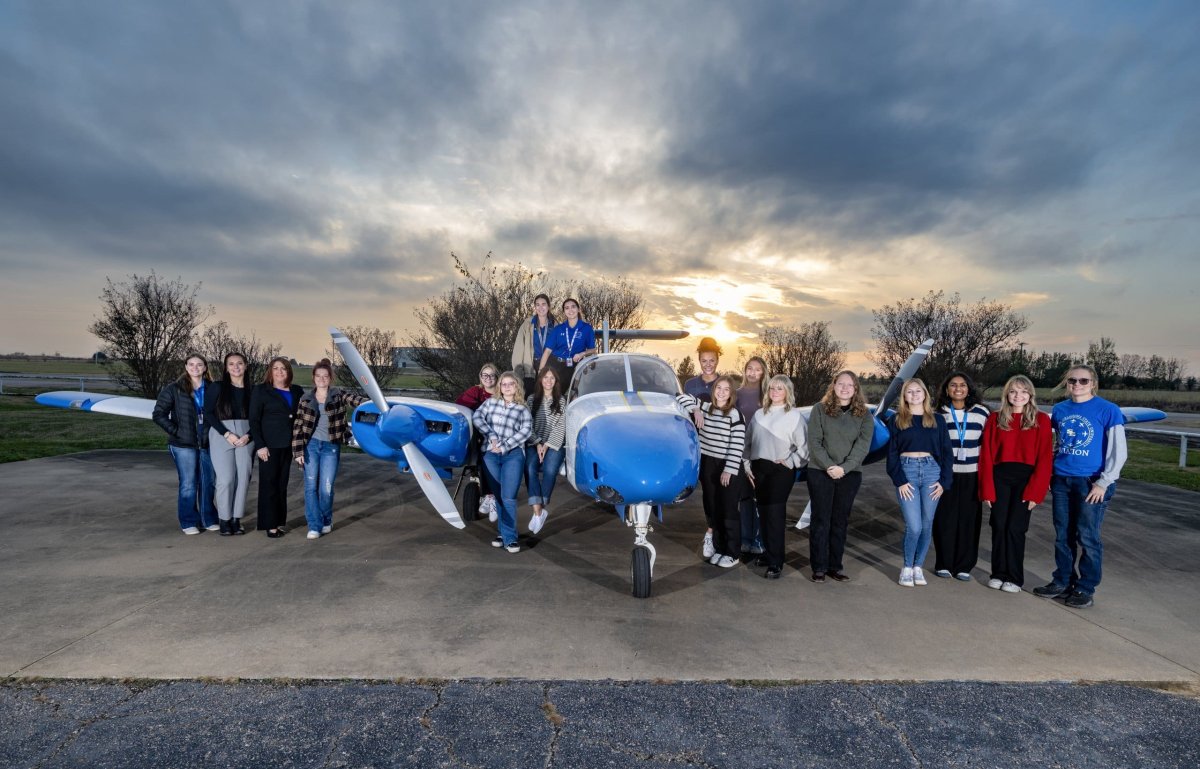
For nearly 60 years, Southeastern Oklahoma State University’s Aerospace Sciences Institute has been preparing professionals who keep the aviation industry moving forward. Through training and hands-on experience, the program has graduated pilots, engineers, mechanics, air traffic controllers, and instructors who have gone on to serve across the aviation world.
Southeastern State College was the second college in the United States to offer a professional aviation degree, beginning in 1966.
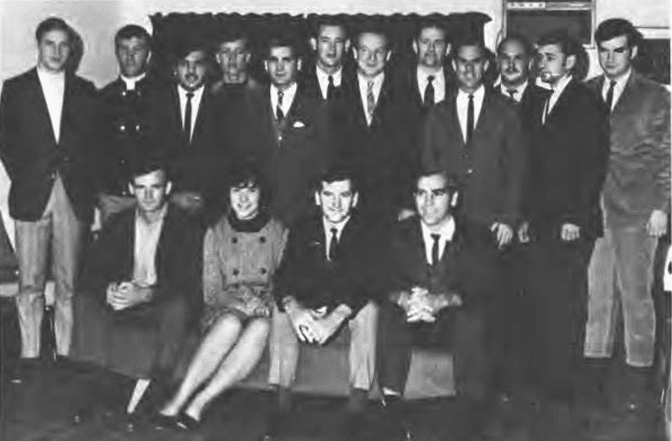
As the world has changed in the 60 years since Southeastern’s aviation programs began, so has the representation within the program.
In the first pledge class photo of the Alpha Eta Rho aviation fraternity in the 1969 yearbook, one woman – Judy Congreve of Chicago, Ill. – was in the 16-member class.
Now, as of the 2025 fall semester, over 25 percent of the ASI – students, faculty, and staff – are women.
Southeastern is ahead of the professional norm in this regard, as data from the Federal Aviation Administration shows only 15.9 percent of student pilots in the United States are women, while at Southeastern that number is 23.9 percent.
Hannah Stout, who is training to become a Certified Flight Instructor and is the chapter president of Women in Aviation at Southeastern, shared her perspective: “Once you feel that love for the sky, it opens a pathway for a whole lot of opportunities. There are some people who don’t want women to be up in the air, which is the unfortunate reality. However, here at Southeastern, it has been uplifting.
“Being a woman in a predominantly male-dominated field can be challenging… but we are all very highly motivated and I think our positive attitudes and uplifting spirits definitely help us get through.”
Breanna Reynolds, a student from Beaumont, Texas, echoed these sentiments, saying, “I didn’t want to get treated differently just because I was a girl. I can do the same things, and I can fly even better than some of these other guys. My favorite thing about being here is that we are all treated just the same. We have a lot of leadership roles, but we’re also all friends. We are all connected with everything that we do, and all of our instructors are amazing and inclusive.”
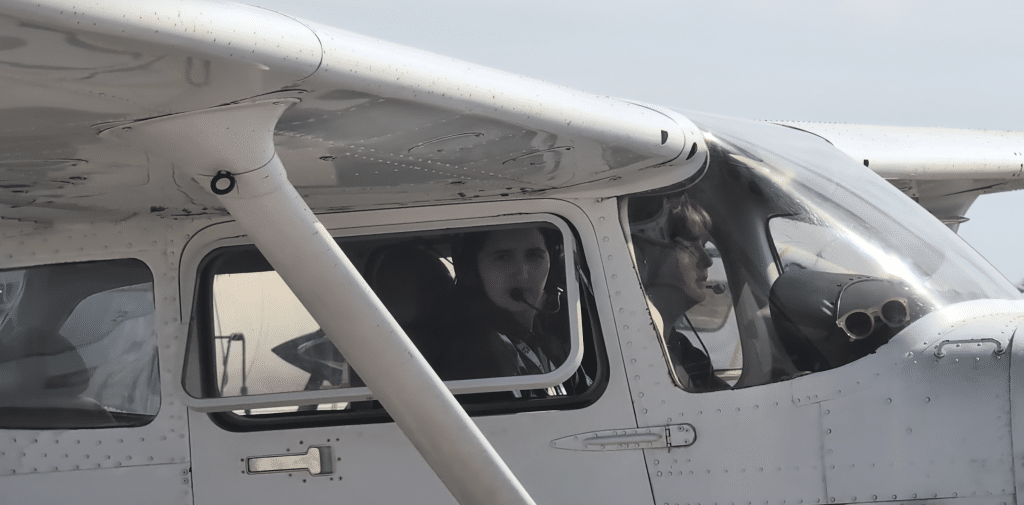
Recent graduate and current flight instructor Tatiana Beach has found that certain traits have helped herself and female students as they train. “Women have a sense of understanding of how to tackle big situations. I think a lot of times when you get into a stressful situation or when you’re dealing with people, women just have such a good grasp on how to walk into those situations and have a conversation with somebody or understand how somebody’s feeling and then really tackle it from there, which sometimes can be a little left out of the aviation industry – the people aspect versus the machine side.”
In the non-pilot categories, Southeastern’s 32.1 percent female representation is above the national average of 29.0 percent.
This includes Janeva Maxson, who was named the Chair of the Aviation Management program prior to the fall semester in 2025. Maxson, a two-time Southeastern graduate, returned to the ASI after 29 years of civil service to the United States Air Force.
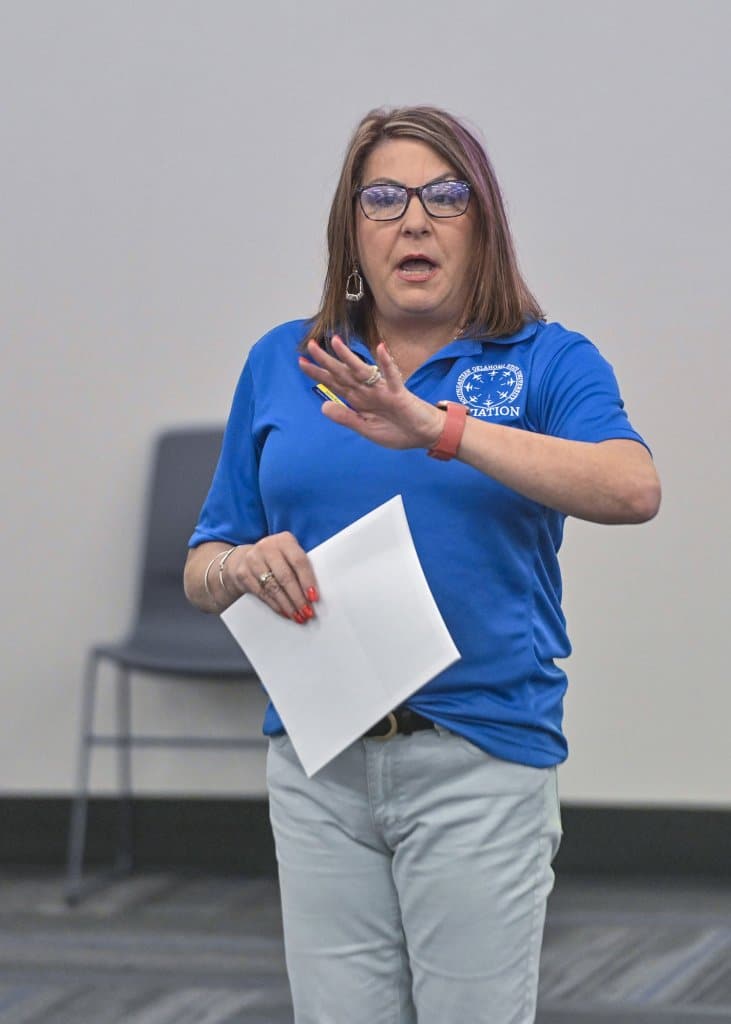
“One of the key things we do here well is empowering women to realize that there’s so many things you can do in the aviation field outside of being a pilot. Aviation is such a great wide area for you to explore. You could be a pilot, or you could be in aviation management. You could run an airport. You could work for a defense contractor. There are so many things that you can do in aviation besides be a pilot. I think that’s one thing that’s important is to realize that aviation is a huge world out there and there’s so many things that you could do with it.”
The program’s support for women extends to the professional staff as well.
Mechanic Layla Sheffield, who supports the flight operations at Eaker Field, shared, “I have never been told here once that I couldn’t do something or that I was incapable. I’ve always been pushed to do better, to be better. We’re all working together. The mechanics are working to keep the planes up. Your pilots are working to keep everybody safe. No backhanded compliments, things of that nature. We all just work together.”
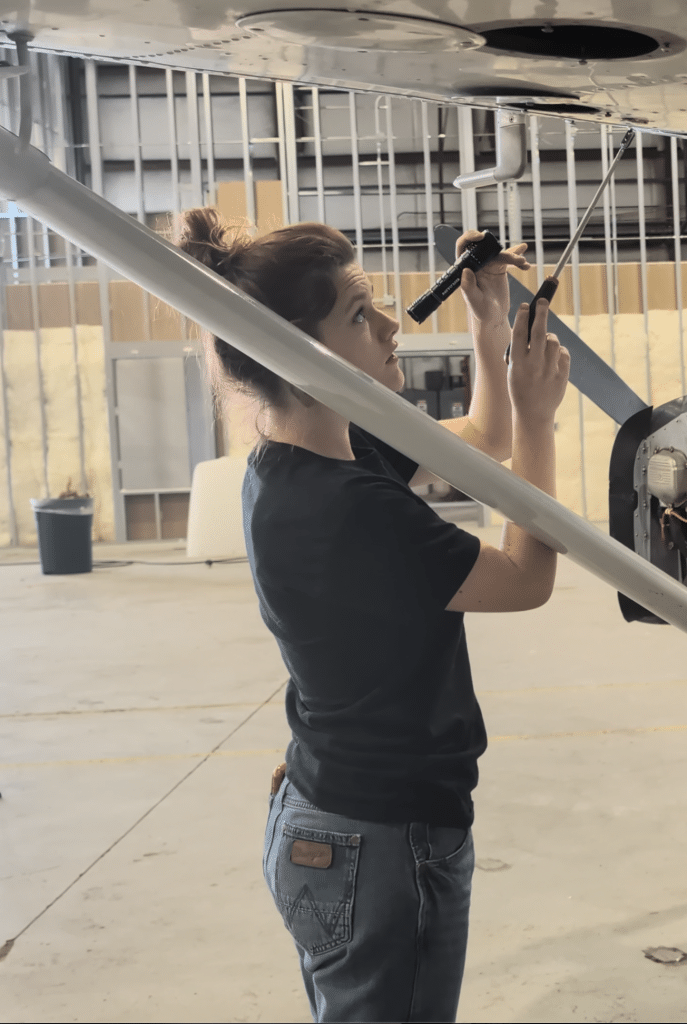
Mechanic Leslie Matthews, who previously worked at other facilities, echoed this sentiment, saying, “I would say that it’s a very rewarding career. I get to learn and be around airplanes in a way that I normally wouldn’t have been able to. Here I’ve been treated as equal where I wasn’t at other places. Our ideas have been heard here as opposed to ignored.”
Southeastern is paving the runway for an incredible group of female aviators ready to take off into the world of Aerospace Sciences. Their passion and dedication represent the future of aviation and the growing impact of women across the industry.
Sydney Reardon, a professional pilot student from Roanoke, Texas, who is vice president of the Women in Aviation chapter, summed up the overall experience, saying, “Southeastern is truly such an aviation family, and there has not been a second where I have doubted that I belong here and that I am just as cut out as anyone for this career.”